
The way businesses pay tax through the year is about to get a modern update. As part of the 2026–27 Federal Budget, the Government announced a new, more flexible approach to Pay As You Go (PAYG) instalments, and the ATO is already working with software providers to make it happen. Here’s what’s changing, who it helps, and what to watch out for before you sign up.
What’s changing
At the moment, your PAYG instalments are essentially a forecast based on your rear-view mirror. The ATO looks at last year’s tax result and adjusts it upward using a set GDP uplift factor, then asks you to pay a slice of that each quarter, regardless of how this year is actually tracking.
From 1 July 2027, businesses will be able to opt in to Dynamic PAYG instalments instead. Rather than working off last year’s figures, an ATO-approved calculation built into the accounting software you may already use will work out each instalment from your actual, current trading performance.
There’s a second change worth noting. Businesses will also be able to choose to report and pay their instalments monthly instead of quarterly. For most, that will be a choice. But if you have a history of not meeting your obligations, monthly reporting won’t be optional; the ATO will require it.
Both measures are voluntary opt-ins from 1 July 2027 (aside from the mandatory monthly rule for non-compliers). The ATO is running pilot programs and working with software providers through 2026–27 to prepare, and has released a draft guideline, PCG 2026/D3, setting out how it will treat participants who use the method as intended.
The upside
If your income rises and falls through the year, this is a genuine improvement. Instead of paying a flat percentage of last year’s result while your circumstances have moved on, your instalments should track what you’re actually earning right now.
In practice, that means two things. Have a stronger year and the system keeps pace, so you’re far less likely to be hit with a large, unexpected tax bill at year end. Have a quieter patch and your instalments ease off too, rather than leaving your money sitting with the ATO for months while you wait on a refund. For a business managing cash flow week to week, keeping more of that timing in step with reality is a real benefit.
The catch
Bringing tax payments forward, and potentially onto a monthly cycle, isn’t free of downsides. If your cash flow is already tight, a steady drumbeat of smaller, more frequent payments can be harder to manage than a smaller number of larger ones. It pays to think about which rhythm actually suits your business before you opt in.
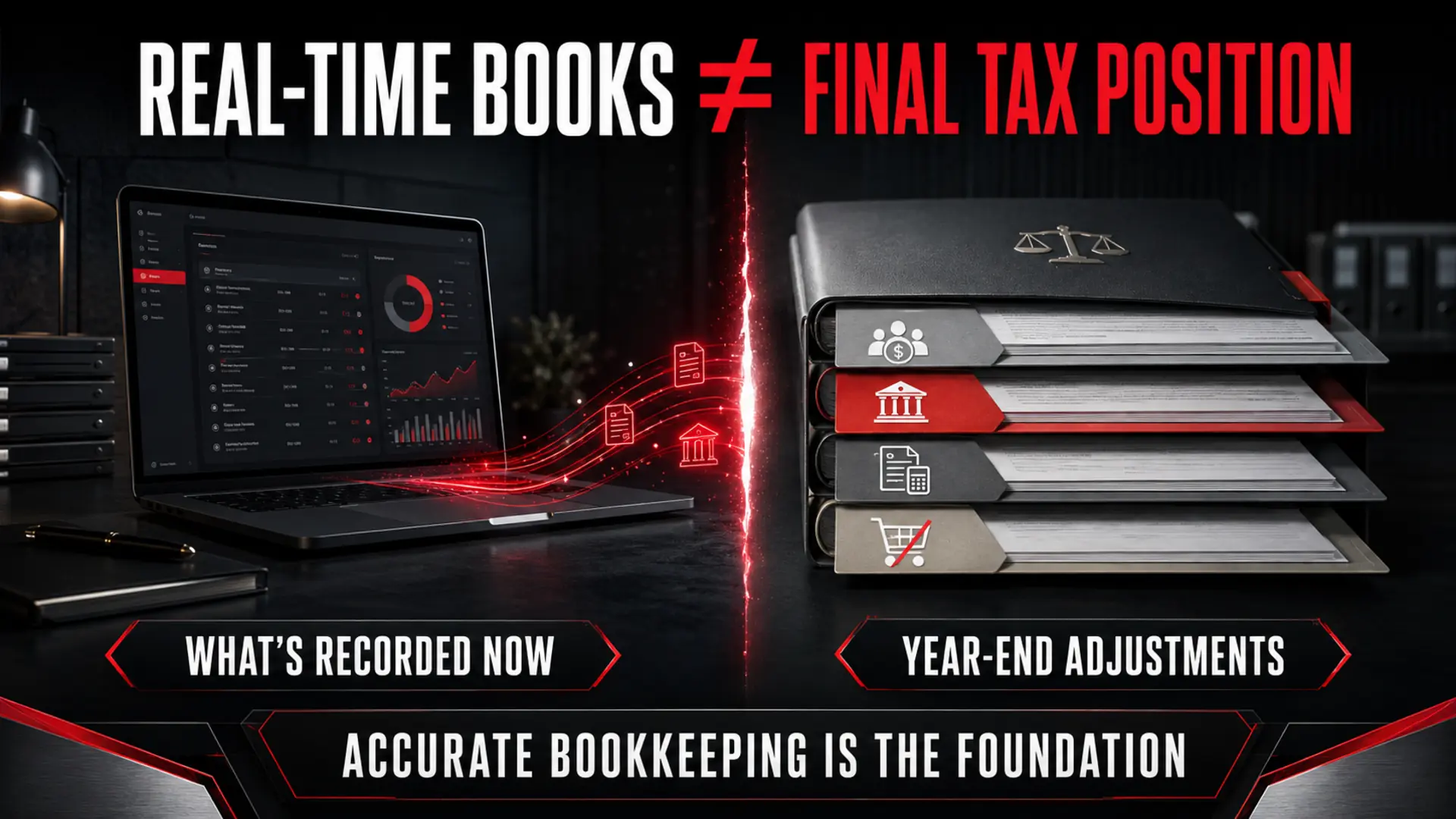
There’s also a bigger issue than simply keeping the books current, and it’s the one to understand properly. Your software shows what’s been recorded, not your final tax position. Most entities have year-end adjustments that a live, real-time calculation was never designed to capture, things like trust distributions, Division 7A loans, the difference between tax and accounting depreciation, and non-deductible expenses. For trusts and companies in particular, the gap between what the software reports and what the tax return ultimately shows can be significant. A dynamic instalment is only ever as accurate as the picture your bookkeeping paints, and for many businesses that picture is incomplete until the accountant has been through it.
Key takeaway
Nothing changes for now. This is an opt-in measure that begins on 1 July 2027, and the underlying law is still working its way through, so there’s no action required today.
What it is, though, is a useful prompt. Between now and then, it’s worth asking whether your bookkeeping is accurate and up to date enough to support a real-time tax calculation, because that’s the foundation the whole system rests on. When Dynamic PAYG instalments become available, have a conversation with your accountant about whether they’d genuinely suit your business, and your cash flow, before you switch across.
This article is general information only and doesn’t take your specific circumstances into account. The measures described are not yet law and remain subject to change. For advice tailored to your business, please get in touch with the team at Keypoint Accountants.