
5 Pieces of Good News for QLD Small to Medium Business in 2026
Most of the Queensland business owners we speak with will tell you the same thing: the operating environment in 2026 still feels difficult. Costs remain elevated across the board. Compliance requirements continue to grow more complex. Profit margins are harder to protect. And the interest rate environment everyone expected to ease? It’s staying restrictive well into this year.
These aren’t abstract concerns – they’re showing up in cash flow forecasts, hiring decisions and investment planning every single day. We’d be ignoring reality if we suggested otherwise.
At the same time, there are some genuinely positive developments for SMEs this year that deserve more attention than they’re getting. Changes to tax write-offs, improvements in compliance processes, expanded state government support, and meaningful advances in business technology that can deliver real productivity gains. None of these eliminate the broader challenges, but for businesses that understand them and act strategically, they represent legitimate opportunities to improve cash position and operational efficiency in what remains a tough environment.
1. The $20,000 instant asset write-off lives on

The Australian Government extended the $20,000 instant asset write-off through to 30 June 2026 for businesses with an aggregated turnover of less than $10 million. This means eligible Queensland businesses can still claim immediate 100% deductions on business equipment, tools, vehicles and other depreciating assets that cost less than the threshold.
The practical benefit here is cash flow timing, not the total tax saved. Under standard depreciation rules, a $15,000 piece of equipment might be written off over five or more years depending on its effective life. You’d claim perhaps $3,000 in year one, another $3,000 in year two, and so on. With the instant asset write-off, you claim the full $15,000 deduction in the year of purchase (assuming the asset is installed and ready for use by 30 June).
For a business operating at the 25% company tax rate, that’s a $3,750 tax saving this year instead of $750. The difference compounds when you’re making multiple equipment purchases.
We’re seeing this used effectively by trades businesses upgrading tools and equipment, cafés and restaurants replacing commercial kitchen gear, logistics firms purchasing light commercial vehicles, and professional services practices upgrading IT infrastructure. The write-off also applies to eligible improvements and fit-outs, making it relevant for businesses investing in premises.
What matters is timing and structure. The asset must be purchased, installed and ready for use by 30 June 2026 to qualify for this year’s deduction. How you acquire the asset also affects eligibility – outright purchase versus certain finance arrangements can produce different outcomes. And obviously, you shouldn’t buy equipment purely for the tax deduction. The asset still needs to make commercial sense for your business and generate value beyond the tax benefit.
The extension to June 2026 gives businesses most of this year to plan purchases strategically rather than rushing decisions in the final quarter. For businesses carrying equipment that’s reaching end of life or constraining productivity, the write-off provides a genuine cash flow advantage for bringing forward necessary replacement.
2. Longer time windows to correct honest tax errors

From the 2025–26 income year, small businesses now have a four-year amendment period to correct mistakes or include missed deductions in their tax returns, up from the previous two-year window. This applies to genuine errors and omissions, not deliberate avoidance or fraud.
The extended timeframe provides meaningful peace of mind for business owners juggling operations, customers, staff and compliance obligations simultaneously. It’s common for legitimate deductions to be missed in the initial preparation of returns – particularly for businesses managing their own bookkeeping or working with limited financial records. Vehicle expenses that weren’t properly logged, equipment purchases that were capitalised when they could have been immediately deducted, home office claims that were underestimated, or professional fees that weren’t claimed at all.
Previously, if you discovered these errors more than two years after lodgement, they were effectively lost. The four-year window now allows you to recover those deductions, which for many businesses can amount to several thousand dollars in refunds.
The practical application here is straightforward: it creates opportunity for mid-year or annual reviews of prior returns to identify missed claims while they’re still within the amendment period. For businesses that have improved their systems, changed accountants, or simply have better records now than they did two or three years ago, this extension allows you to benefit from that improved capability retrospectively.
What this isn’t is permission to be careless with initial lodgement. The amendment period is designed as a safety net for honest mistakes, not as a way to delay proper compliance. The ATO still expects businesses to take reasonable care when preparing and lodging returns. But for well-intentioned businesses operating under pressure, the extended window reduces the penalty for imperfect record-keeping and creates a genuine opportunity to recover value that was always legitimately yours.
The strategic approach is to build regular review points into your financial calendar – quarterly check-ins or at minimum a mid-year review – to identify potential issues or missed opportunities early rather than discovering them years later when memories have faded and documentation has gone missing.
3. ATO’s softer touch: education over penalty
The ATO’s compliance approach for 2025–26 explicitly prioritises education and engagement ahead of automatic penalties for small business non-compliance. The regulator has committed to clearer guidance on common problem areas including GST treatment, worker classification (contractor versus employee), and correct use of tax incentives, with an emphasis on helping businesses get things right rather than punishing mistakes.
This represents a meaningful shift in tone and process. The ATO’s own guidance now states that for many compliance issues, they’ll contact businesses with educational information and an opportunity to correct errors before penalty notices are issued. This doesn’t apply to deliberate evasion, phoenixing or aggressive tax avoidance, where the ATO remains appropriately tough. But for honest mistakes made by businesses trying to comply with complex rules, the approach is noticeably less punitive than in previous years.
In practice, this means businesses are more likely to receive an educational letter explaining an issue and requesting voluntary disclosure before they receive a penalty assessment. The ATO is also producing more practical guidance materials, webinars and support resources aimed at helping SMEs navigate common compliance challenges.
The obvious benefit is reduced audit anxiety for businesses that are genuinely trying to do the right thing but operating in areas where the rules are genuinely unclear or open to interpretation. Worker classification is a good example – the distinction between contractor and employee can be legitimately difficult to assess, particularly in modern working arrangements involving platform work, flexible hours and outcome-based payments.
The less obvious benefit is that proactive engagement with ATO guidance and early response to educational contact can prevent small issues from becoming large problems. A minor GST treatment error identified and corrected early might result in no penalty at all. The same error discovered three years later during a formal audit produces a very different outcome.
What businesses need to understand is that “education first” doesn’t mean “ignore your obligations and wait to be contacted.” The ATO expects businesses to engage with their guidance, respond promptly when contacted, and take reasonable steps to comply with the law. Professional advice becomes more valuable in this environment, not less, because understanding what the ATO is focused on and how to position your affairs accordingly allows you to avoid contact in the first place.
This is where working with an accounting firm such as Keypoint that maintains active relationships with the ATO and stays current on compliance focus areas adds real value. We translate ATO guidance into practical action, help you stay ahead of emerging issues, and position your compliance approach to minimise risk while maximising available concessions.
4. Queensland support and grants keep expanding
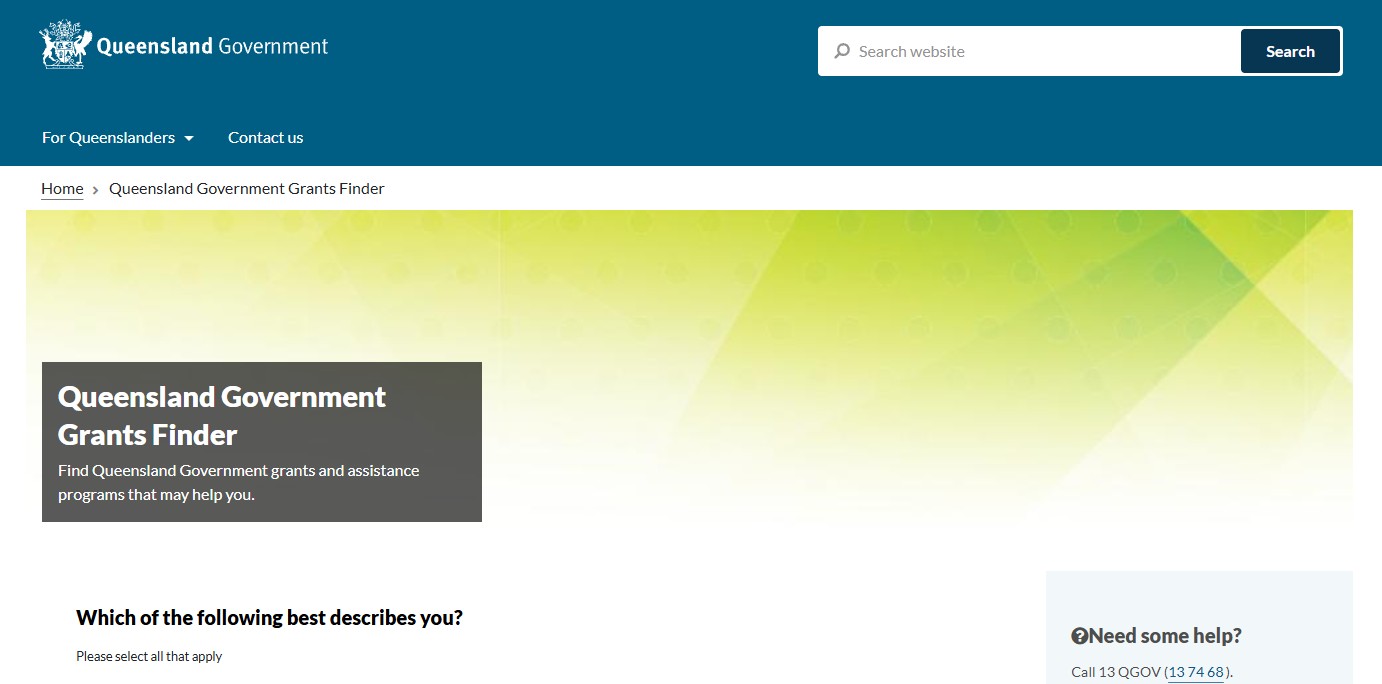
The Queensland Government’s support programs for small and medium businesses continue to expand in scope and funding through 2026. The Small Business First program provides access to subsidised business advice, mentoring and capability development support, while the Business Growth Fund offers grants of up to $75,000 for equipment purchases, expansion projects and operational improvements.
These aren’t token programs with impossibly narrow eligibility criteria. The Business Growth Fund in particular is designed to support genuine growth investment by established SMEs across a wide range of sectors. Eligible projects include purchasing equipment, upgrading facilities, expanding capacity, improving productivity, and adopting new technology. Co-contribution requirements apply – businesses typically need to contribute dollar-for-dollar with the grant – but for businesses that were planning investment anyway, this effectively halves the capital requirement.
The strategic opportunity here is coordination. Grant funding can be paired with federal tax incentives like the instant asset write-off to compound the benefit. A $50,000 equipment purchase might attract a $25,000 grant, reducing your net outlay to $25,000, which then qualifies for immediate tax deduction (if under the $20,000 threshold, or via other accelerated depreciation rules if larger). The result is a significantly reduced effective cost for equipment that improves your business capability.
The Small Business First advisory and mentoring programs provide subsidised access to professional expertise in areas like digital adoption, export development, financial management and growth planning. For businesses that would benefit from external expertise but can’t justify the full cost of engaging consultants, these programs reduce the barrier to accessing quality advice.
What matters is taking these programs seriously rather than dismissing them as bureaucratic box-ticking exercises. Well-prepared applications from businesses with clear commercial rationale and demonstrated capability to deliver projects have strong success rates. Poorly prepared applications from businesses chasing grants without genuine business need do not.
The process requires time and attention – applications need to clearly articulate the business case, demonstrate financial capacity to deliver the project, and show how the grant will support specific growth or productivity outcomes. This is where professional support in structuring applications and aligning them with program criteria makes a measurable difference to success rates.
It’s also worth noting that grant timing can be coordinated with your broader financial planning. Understanding when funding rounds open, how long assessment takes, and when funds are likely to be paid allows you to sequence other business decisions – equipment orders, staff hiring, facility upgrades – for maximum efficiency and minimum cash flow stress.
5. AI is the quiet productivity revolution for 2026
Forward-thinking SMEs are already saving measurable time and money through smart and well-considered targeted application of artificial intelligence tools. This is often far more than just using ChatGPT to answer some questions, and to manipulate a spreadsheet – though of course it can do both of those things and much more incredibly well.

What we’ll see more of in 2026 is accessibility – for instance mainstream accounting and business management platforms including Xero,MYOB and QuickBooks are rolling out integrated AI capabilities directly within their platforms that handle tasks like automated transaction categorisation, cash flow forecasting, anomaly detection in bookkeeping, and instant data analysis that previously required manual spreadsheet work.
Of course, this isn’t enterprise-grade AI but also it’s not requiring dedicated IT departments and a six-figure implementation budget! These are tools built into the software many Queensland businesses already use, available at modest additional cost or in some cases included in existing subscriptions.
The productivity gains can be tangible and immediate. Automated bank reconciliation that previously took hours can now be completed in minutes. Cash flow forecasting that required manual spreadsheet construction and constant updating can be generated automatically from real transaction data. Anomaly detection alerts you to potential bookkeeping errors or unusual transactions before they compound into larger problems. Data analysis that previously required an accountant to extract and manipulate your data can now be run instantly with natural language queries.
The strategic opportunity isn’t replacing people with software. It’s using AI to handle repetitive, low-value administrative tasks so that your people – and your external advisors – can spend time on higher-value work like strategic planning, customer relationships, business development and genuine advisory services.
For businesses operating with tight margins and limited staff, this can make a big difference. A practice manager spending six hours per week on manual reporting can redirect that time to process improvement or client development. An accounts person spending ten hours per month reconciling transactions can focus on analysis and variance investigation instead. The owner spending evenings catching up on administrative work can actually take evenings off.
What businesses need to understand is that AI tools still require human oversight and judgment. These systems are excellent at pattern recognition and repetitive processing, but so far they don’t understand context that well, can’t necessarily make strategic decisions, and will confidently produce nonsense, or low quality responses (“AI-Slop”) if fed incorrect data. “Garbage in, garbage out” still applies, perhaps more than ever.
There are also legitimate considerations around data security, privacy and the risk of over-relying on automated systems without understanding what they’re actually doing. Not every AI feature is useful for every business, and the temptation to implement technology for the sake of technology can waste time and money without delivering genuine value. It’s better to start “inside” and look out – in other words, assess what problems, systems and processes you think could be enhanced or made more efficient with various AI solutions. Once you’ve established a short list, then look at what AI tools and platforms might suit you to deliver a real result.
The businesses getting real value from AI in 2026 are those taking a measured, strategic approach: identifying specific pain points where automation would provide clear benefit, implementing tools in a controlled way with proper training and oversight, and maintaining human review of outputs rather than blindly trusting the algorithm.
This is an area where professional guidance makes a significant difference. The goal isn’t to chase every new technology feature, but to implement the specific capabilities that will deliver measurable productivity improvement or cost reduction for your business.
It’s true that there may be some degree of “threat” to small businesses embedded in the lightning-fast advancement of AI capability – but for those who take an early-adopter view, it’s genuinely this decade’s best available productivity tool for SMEs, if implemented thoughtfully rather than reactively.
Real optimism, if you’re ready to act
None of what we’ve outlined above eliminates the broader challenges Queensland SMEs are facing in 2026. Costs are still elevated, margins are still under pressure, and interest rates aren’t providing the relief many businesses had hoped for by now.
But these five areas – extended asset write-offs, fairer amendment processes, education-focused compliance, expanded state support, and accessible AI productivity tools – represent genuine advantages for businesses prepared to position themselves to use them. Not necessarily “transformational” overnight fixes, but solid practical opportunities to improve cash flow, reduce compliance risk, access growth capital and operate more efficiently.
The distinction between businesses that will navigate 2026 successfully and those that will struggle often comes down to intentional positioning and preparation. Understanding where policy advantages exist, having systems and advice in place to capitalise on them, and moving proactively rather than reactively.
If you’re running a Queensland SME and want to discuss how any of these opportunities apply to your specific situation – whether that’s timing equipment purchases for maximum tax benefit, reviewing prior years for missed deductions, positioning for grant applications, or implementing productivity improvements – we’re here to help. This is exactly the kind of strategic planning and advisory work we do with clients every day.
The businesses that come out of 2026 stronger won’t be the ones that waited for conditions to improve. They’ll be the ones who recognised where real advantages existed and executed well on capturing them.